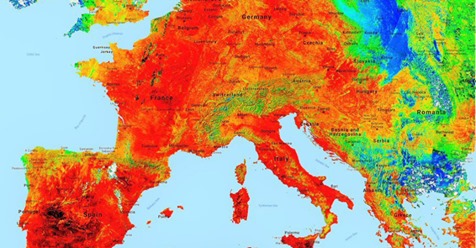
A carbon sink is a reservoir that stores carbon, keeping it sequestered instead of circulating in the atmosphere as a greenhouse gas. Plants, the ocean, and soil are the main carbon sinks in nature. Plants absorb carbon dioxide from the air for use in photosynthesis, leaving some of this carbon in the soil when they die and decompose. The oceans also store much of the planet’s carbon dioxide.
All of these sinks are being ruined by human activities today, and heroic measures are required to protect them and use them even more extensively to sequester carbon and prevent runaway global warming. Here we will examine these natural carbon sinks as well as some technological inventions that are being proposed for use in capturing and storing or recycling carbon.
Some nations occupy land with large carbon sinks such as rainforests. And some nations — especially the industrially advanced ones — emit disproportionate amounts of greenhouse gases to the atmosphere. We are all being challenged now to reduce such emissions, mainly by using less fossil fuel. People living in rich countries find this especially hard to do, for we are accustomed to the use of abundant energy. At the same time, we are asking people in the less developed countries not to adopt the same greenhouse gas-emitting technologies that had made us rich. This is unfair, but it is also essential. Every country must cut back, including both those that caused most of the global warming problem itself and those blameless ones that will be forced unjustly to sacrifice. But naturally, not all countries seem willing to accept the necessary deprivations.
COP is an acronym standing for “Conference of the Parties (COP) to the United Nations Framework Convention on Climate Change.” COP 21 was held in Paris in 2015 and successfully yielded “the Paris Agreement,” which has been signed or ratified by all 197 countries, with each one promising to curtail global warming in its own way. However, President Trump has since declared that the United States will withdraw from it. Sharp bargaining among other states continues at every annual COP meeting.
The most serious demands are proposed by such countries as Brazil. Most people know that the survival of humankind may depend on the preservation of the Amazonian jungle. Nevertheless, that rainforest is rapidly being replaced by cattle ranches or flooded by dams. When COP 24 met in Poland in December 2018, Brazil’s newly elected President Jair Bolsonaro declared that his country would not preserve its rainforest, as previously agreed.
Brazil is not unique in reneging on its promises. A number of other less developed countries now insist on being compensated for their own sacrifices. It is not clear what kinds of deals can be struck, but the way forward does seem to require more negotiations — new quid pro quo arrangements to pay countries for preserving the carbon sinks. This plank of the Platform for Survival recommends that such negotiations be undertaken without further delay.
Costs and Benefits
To negotiate contractual agreements to preserve a carbon sink would seem to require all negotiating parties to fully recognize the sink’s value, though in fact this is often difficult to assess. Parties often dicker over a price without knowing either the true costs or the potential benefits of maintaining the sink. In the final analysis, sinks have infinite value, for they are essential for the survival of the human species. Even in the shorter term, most investments in reducing global warming are financially profitable. For example, although there may be up-front costs in protecting a forest or waterway or adopting a new technology that uses renewable energy, the benefits usually are worth far more and repay the investment rather quickly.
One illustration of this point comes from Project Drawdown, which has demonstrated the financial advantages of investing in about 100 climate-saving measures. They asked: How much would it cost to reverse global warming? The first cost that they calculated is the total price of implementing all 100 solutions: $129 trillion over thirty years, or about $440 per person per year. However, a more illuminating number is the net cost– how much more money would be required to implement climate solutions, beyond the cost of continuing to do business as usual. For example, they compared the costs of a solar farm to that of a coal-fired plant. And they compared the costs of an electric transport system to one fueled by oil. That net cost of all 100 solutions is $27 trillion over thirty years — i.e. lower than the first cost, thus offering remarkable savings. They also calculated the net operating costs or savings, and found that over thirty years, there would be net operating savings of $74 trillion. (1) If the public realized this advantage, a stronger commitment would surely exist to reduce climate change.

A solution to one of the global problems is often also a solution to one or more others. For example, we want to keep the maximum amount of carbon in the soil for the sake of preventing global warming. However, if instead we are primarily concerned with increasing the food supply of the planet and maintaining soil fertility for future generations, we will also promote carbon sequestration in the soil. Indeed, there is no need to discuss the protection of soil carbon sinks in detail here, for an excellent explanation already has been provided in the article about Plank 14: “All states shall support improvements of soil health for resilient food production and carbon sequestration.” Sequestering carbon in soil both reduces global warming and improves food production.
Soil as a Carbon Sink
Agriculture. Farming is the main factor that determines whether the soil will be a carbon sink or a carbon source. At present, most farms are major carbon sources, not sinks, because farm animals emit carbon and farmlands are tilled, releasing more carbon to the atmosphere than the plants manage to sequester with their roots.
The earth beneath our feet contains an estimated three times as much carbon as that found in the atmosphere and four times the amount stored in all living plants and animals.(2) It can hold even more – and indeed actually did so before farming began about 12,000 years ago. One 2017 report estimated 133 billion tonnes of carbon had been lost, noting:
“Human population and economic growth has led to an exponential rise in use of soil resources.
“The consequences of human domination of soil resources are far ranging: accelerated erosion, desertification, salinization, acidification, compaction, biodiversity loss, nutrient depletion, and loss of soil organic matter.
“Of these soil threats, loss of soil organic matter has received the most attention, due to the critical role [it] plays in the contemporary carbon cycle and as a key component of sustaining food production.”(3)
Renee Cho adds,
“Currently, soils remove about 25 percent of the world’s fossil fuel emissions each year. Most soil carbon is stored as permafrost and peat in Arctic areas, and in moist regions like the boreal ecosystems of Northern Eurasia and North America. Soils in hot or dry areas store less carbon.
“How much carbon soils can absorb and how long they can store it varies by location and is effectively determined by how the land is managed. Because almost half the land that can support plant life on Earth has been converted to croplands, pastures and rangelands, soils have actually lost 50 to 70 percent of the carbon they once held. This has contributed about a quarter of all the manmade global greenhouse gas emissions that are warming the planet.
“Agricultural practices that disturb the soil—such as tilling, planting mono-crops, removing crop residue, excessive use of fertilizers and pesticides and over-grazing—expose the carbon in the soil to oxygen, allowing it to burn off into the atmosphere. Deforestation, thawing permafrost, and the draining of peatlands also cause soils to release carbon.”(4)
Though in most parts of the world farming has been depleting the soil and the nutrients in the food that is grown there, this trend can be reversed. At the COP21 meeting, France introduced an initiative called “4 per 1000.” This refers to the objective — to increase the carbon content of farmland everywhere by .4 percent per year.(5)
Many methods are available for this, with the advocates calling their respective approaches, inter alia, “regenerative agriculture,” “organic farming,” and “climate-smart agriculture.” The primary principles are that farmers should make sure the soil is covered with plants at all times by planting “cover crops” between rows or other exposed soil, to reduce erosion and return nutrients such as nitrogen to the soil. They should rotate the annual crops and avoid disturbing the soil by tillage—plowing. “No-till farming” is especially important for retaining carbon, since turning soil over to prepare it for planting exposes the buried carbon to oxygen where it can be taken up as CO2, blown away by the wind, or washed away by rains.
Soil Amendments. Agriculture can also increase the carbon content of soil by replacing much nitrogen-based fertilizer (which pollutes waterways and oceans and enters the atmosphere as a potent greenhouse gas, nitrous oxide) with biochar and (we hope eventually) commercially-grown special microbes that fix nitrogen in the soil, much as legumes do. These microbial soil amendments are not available yet,(6) but biochar has been used since ancient times, though only lately has it become recognized as a superb way of adding carbon to soils damaged by conventional farming methods.
Biochar is a form of charcoal, which is produced by burning organic material in the absence of oxygen. It is not a fertilizer but it improves the soil by adding carbon in a porous form that retains water and cannot be absorbed back into the atmosphere. Some ancient indigenous societies of the Amazon region, where the tropical soil is normally too infertile for permanent farming, regularly made charcoal from their household wastes and buried it. To this day, as a result, one can find areas of rich black soil six feet deep around the sites where they lived; this soil, called terra preta, has retained huge amounts of carbon for up to 7,000 years. Today it is possible to pyrolize biomass (agricultural and industrial wastes) as well as such wastes as garbage, sewage, sawdust, old cardboard boxes, turkey feathers and other refuse from abattoirs, in devices that also retain the oils and gases that are produced along with the biochar. These side-products can be used for clean fuel, with the biochar itself becoming a valuable soil amendment. In most types of soil, adding biochar improves the crop yields markedly, while of course also removing CO2 from the atmosphere and sequestering the carbon permanently.(7) Some enthusiasts of biochar favor enacting legislation that will require all commercial fertilizers to include a specific percentage of biochar.
Peatlands. Besides agriculture, the draining of peat bogs seriously threatens the Earth’s overall carbon sequestration. These bogs only cover about three percent of the world’s land surface, but they store at least twice as much carbon as all existing forests. At least one-third of the world’s organic soil carbon is in peatlands.(8) They were created when vegetation died, often 8,000 or more years ago, and was partially preserved in waterlogged terrain. The organic material was trapped and compressed in the absence of oxygen, preventing its decaying and release into the air as carbon dioxide. If left long enough, these peat bogs would become coal and store the carbon indefinitely.
Unfortunately, peat bogs have been considered wastelands, and indeed they are not an environment that human beings enjoy. The wet ground squishes underfoot and mosquitoes abound. People, including environmentalists, often feel that they are improving the land by draining it, especially since it is a source of methane, a potent greenhouse gas. However, draining these bogs allows the ancient organic matter to begin decaying and turning into carbon dioxide. Also, drained peatlands can catch fire, which becomes almost impossible to put out. In 2015 Indonesia’s vast drained bogs burned, releasing more than 800 million metric tonnes of CO2 and leading to the premature deaths of 100,000 people.
Peatlands can be partly restored by preventing further draining. The bogs must be kept wet or their carbon will be released and cannot be recovered. Carbon markets can help protect these carbon sinks by putting a price on their preservation. Farmers who are tempted to drain their peatlands and produce lucrative palm oil may instead be paid to protect them as precious carbon sinks.(9) Such deals should be negotiated as early as possible, before the damage is irreversible.
Deserts. Unlike peatlands, deserts are lands that sequester almost no carbon. Few plants grow there because of the lack of water, and without plants to carry carbon to their roots, no carbon can be sequestered underground. Desertification has been increasing in many areas of the world because of climate change and unsustainable land-management practices. However, it is possible to reverse that trend if supplies of water can be obtained. Approximately 32 million square kilometres of desert land can, at least according to some proposals, be made fertile again, include parts of the Sahara.
Marginal deserts can sometimes be restored by improving agricultural methods, such as permaculture and planting trees. Some innovators propose to capture and manage floodwaters or divert seawater inland and grow plants that thrive in salty soil. Other proposals involve using solar power to distill water; reusing waste water; or obtaining water by cloudseeding. In Qatar, sea water is being purified with the aid of solar powered electricity. Tree seedlings are grown in a greenhouse with the help of the desalinated water, then planted and watered in the desert. In Egypt, treated sewage is being used for irrigation. In China, the shifting sand dunes of the Kubuqi Desert, an area of 18,600 sq km, are being held in place by special plants that grip them and keep them from encroaching on farmed land.(10)
Oceans as a Carbon Sink
By weight, the oceans are about 500 times the size of our atmosphere.(11) They constitute the largest carbon sink on the planet, absorbing more than a quarter if the carbon dioxide that humans put into the air.(12) It is chiefly absorbed into the oceans in a process called the “solubility pump.”
There is also a second mechanism, the “biological pump,” which sequesters the carbon of biological organisms to the deep layers of the ocean and the seabed sediments. These organisms include phytoplankton, which contain carbon captured by photosynthesis, and mollusk shells, which contain calcium carbonate.
The biological pump also includes the transfer of carbon from the air by rain, over land, through waterways into the ocean. When raindrops fall through air they absorbs some CO2, forming weak carbonic acid. When such rain falls on rocks such as limestone, it causes them to “weather” over long periods of time. Water freezes in the cracks and porous parts, expanding and forcing the rocks to crumble into smaller bits — the soil that we walk on. The carbonic acid combines with calcium and forms calcium carbonate or calcium bicarbonate, which is swept away through streams and rivers to the ocean, where it eventually settles to the bottom, sequestering the carbon in the world’s largest carbon sink.(13) It takes millions of years for this process to change landscapes, but on a regular year-by-year basis, it accounts for a small but significant portion of the planet’s carbon cycle.
Acidification. The solubility pump is the main factor impairing the oceans as carbon sinks. As the air contacts the surface of the ocean, the CO2 in the atmosphere reacts with the water, forming carbonic acid, which gradually makes the whole ocean more acidic. No realistic technological method exists at present for changing the acidity of the ocean except to reduce the amount of carbon in the air. Ocean acidification is already killing coral reefs and certain mollusks, and the trend seems to be increasing instead of declining. According to a National Research Defence Council report,
“Since the start of the Industrial Revolution about 150 years ago, approximately one-quarter to one-third of all CO2 from fossil fuels-—or 500 billion tons—-has been absorbed by the seas, increasing the average acidity by 30 percent. That’s the equivalent in weight of 500 billion Volkswagen Beetles dumped at sea.”(14)
Variability of absorption. Although the oceans are, overall, still a carbon sink, their absorption of carbon varies from one region to another and from one time to another; some areas may currently be carbon sources instead of sinks. The Southern Ocean has reportedly varied in its absorption of carbon because of changing wind speeds in the area, which affect the extent to which deep water is brought to the surface.(15)
During some geologic periods, the oceans are sinks and at other times they are sources of carbon. During ice ages the amount of carbon decreases and the oceans are sinks, absorbing it, whereas between ice ages, the oceans are again net sources, releasing larger amounts of CO2.
Although the upper layers of the ocean both receive and emit carbon, the bottom of the ocean seems to be a more permanent sink. There are now numerous studies underway, exploring the possibility of forcing anthropogenic carbon dioxide down into the deep sea sediments as a long term method of sequestration. The high pressures and low temperature at that depth keep the CO2 from rising.(16) Any excess carbon sent to the bottom of the ocean would join approximately 6.4 trillion tonnes of methane, which is already trapped there in the form of clathrates — frozen crystals of gas and water— which we hope will remain there, far away from the atmosphere.
In the 1990s, the ocean’s uptake of CO2 declined but again it increased in the 2000s, mainly because of changing winds in the Southern Ocean. In the 1990s, the winds were strong, bringing deep water to the surface; because this water was already rich with carbon, it released more of it to the atmosphere and absorbed less of it back.
In the 2000s, on the other hand, there was less overturning of water in the upper layers of the oceans worldwide (possibly because the changing amount of freshwater affected the buoyancy levels), so the surface of the ocean absorbed more carbon and functioned well as a sink. We can hope, but no one can predict whether this trend will continue, allowing the ocean to continue absorbing large amounts of humanity’s excessive carbon emissions.
Nor are there any adequate ways of the solving the problem now.(17) One idea has sometimes been suggested: to spread iron filings into the ocean, so as to make phytoplankton bloom in profusion. They would absorb a lot of carbon and in dying carry it with them to the ocean floor. This might work, but it also creates a potential toxic phytoplankton overgrowth (“red tide“) and a depletion of oxygen required by other sea life, including fish and coral.(18)
A better idea is ocean farming, both for seaweed and oysters. Kelp is a fast-growing plant that can absorb large amounts of CO2 and produce massive amounts of nutrients that could fulfill the protein requirements of the whole human population. When harvested, kelp is also a fine source of fuel to replace petroleum. They must, of course, be removed from the ocean in order to remove the carbon, which would otherwise be released when the plant dies and decays.
Besides fuel, some kinds of seaweed have another excellent effect: when fed to cows and other ruminant animals they prevent the formation of methane. Cows’ burps and farts account for a major portion of the increasing levels methane resulting from human activities.(19)
Oysters also absorb carbon but they truly excel at filtering nitrogen out of the water. Nitrous oxide (N2O) is a greenhouse gas with 300 times the greenhouse gas action of CO2 in its first 100 years in the atmosphere.
The main component of agricultural fertilizer is ammonium nitrate (NH4NO3). This can turn into NO2 and become a greenhouse gas. As such, it is a huge pollutant, emitting greenhouse gas to the atmosphere and then floating downstream to lakes and oceans, where it depletes the oxygen. But every oyster can filter thirty to fifty gallons of water a day.(20)

Forests as Carbon Sinks
There are about three trillion trees on Earth— about 46 percent fewer now than before agriculture began, and they absorb one-third of our fossil fuel emissions.(21) Nevertheless, more than 15 billion of them are cut down each year. Forests now cover about 30 percent of the earth’s land and carbon emissions from deforestation and related mis-use of land account for about 10-15 percent of the world’s total.(22) As the human population grows and desire higher-quality food, pressure increases to cut trees and convert the land to food production.(23)
Agreements were made at the 2015 Paris COP21 meeting to reward forested nations for conserving and increasing their forests. However, the prices offered cannot suffice to meet the needs of people who live at the edge of forests and whose livelihoods depend on extracting value from those trees. Deforestation is proceeding faster in Malaysia than any other tropical country, and Borneo has lost about 80 percent of its rainforest. For several years Brazil was regarded as exemplary for its commitment to prevent the destruction of its rainforest. However, this pledge has been reversed and bargaining must begin anew. One informed estimate as to the cost of saving the Amazon rainforest is about four percent of the amount the world spends on weapons per year.(24)
It was a shock in 2017 when Science Magazine published a report showing that tropical forests are currently carbon sources, rather than sinks. They are adding more carbon dioxide to the atmosphere than they are removing. Scientists from Woods Hole Research Center used 12 years of satellite imagery, laser remote sensing, and field measurements to compile an accurate record of forest loss and growth. They report that the total of all tropical forests on the planet are releasing about 862 teragrams of carbon, but absorbing only about 437 teragrams. (A teragram is a billion kilograms.) But blame the people, not the trees. It is human activity, chiefly by deforestation, that creates this deplorable situation. The only solution is to invest in restoring forests, both by replanting trees and caring for them adequately, and by adding new ones to the earth. The world will need about one trillion more trees to help prevent runaway global warming. This is certainly a challenge, but it is by no means impossible. Campaigns are already underway.
One such movement was started by a nine-year-old German boy named Felix Finkbeiner, who is now twenty. His organization, Plant-for-the-Planet, now has 55,000 “climate justice ambassadors,” who have trained in one-day workshops to become climate activists in their home communities. Most of them are between the ages nine and 12.(25)
In Tamil Nadu, India, a spiritual man named Sadhguru, founder of the Isha Foundation, is leading a movement called Project GreenHands. His meditators and local citizens will be reclaiming degraded land by planting 114 million trees within five years. He expects that within fifteen years, 30 percent of Tamil Nadu will be covered with a greenery.(26)
Another success story began as a failure. The Sahel is a a belt of desert extending 3,360 miles from the Atlantic Ocean to the Indian Ocean along the southern part of the Sahara, with one of the fastest growing populations in the world.(27) Some years ago a large project was launched to create a belt of trees completely across Africa to block the southward encroachment of the desert. The “Great Green Wall” never fulfilled such hopes, but Senegal, Niger, and Burkino Faso have nevertheless become remarkably green, under the management of local farmers, by modifying traditional agricultural techniques. When the countries were governed by France, all trees on a farm belonged to the state. This law was enacted to keep farmers from cutting down trees, but the effect was the opposite: It created a disincentive to plant trees. Forests declined. Now that trees belong to the farmers again, a movement has spread to grow and protect them. An Australian missionary showed them how to find stumps of old trees in their fields and protect and prune them. The farmers grew other crops around the trees, and taught their neighbors these methods. The idea spread and today large swathes of the Sahel are fertile green farms.(28)
This success story teaches a valuable lesson: It is not necessary to clear land of trees in order to grow crops or cattle, as industrialized farms do. Many trees actually are beneficial for pastures and gardens. Coffee trees, for example, thrive best when grown in the shade.(29)
On the other hand, if the world needs a trillion new trees, they cannot all be planted by farmers, children, and meditators—and fortunately more efficient methods are now available: drones. One company is able to plant about 38,000 trees in a day, shooting seeds that are inside little pods containing a nutrient gel. The National Geographic article explains,
“First, a drone scans the terrain and develops a 3-D map of the area. Then, using the data from this “smart map,” the team develops an algorithm for a unique planting pattern. A “firing drone” uses the algorithm to carry out the planting strategy. The drone flies about six feet above the ground, firing germinated seed pods at a speed that will get them under the soil. One drone operator can manage six drones…
“The system’s designers say their technique is much more efficient and accurate than regular aerial seeding methods. Initial testing in the U.K. found that the species planted by drone had a better survival rate than helicopter spreading that’s more commonly used. Some species even had survival rates nearly identical to hand planting.”(30)
Of used on a huge scale technology could perhaps be the cheapest and quickest way to begin seriously halting global warming; let’s deploy a thousand drones all around the world, spraying seeds of fast-growing or food plants, such as bamboo, hemp, and apple.
Negative Emission Technologies
Our civilization, having poured CO2 into the air for centuries, must quickly stop doing so. By the century’s end, we must be sucking back about 20 billion tons of it each year, locking it away in sinks—including some that Mother Nature never provided.
Scientists are inventing many new “Negative Emissions Technologies” (NET), though not all of them will succeed. Here we should consider a few of the ones that can sequester carbon without introducing new potential dangers, as some of the geo-engineering schemes do. If these NETs work, it will be simply by reducing the levels of greenhouse gas.
Bioenergy with carbon capture and storage (BECCS). Biomass is organic material—living or recently living plants and biological wastes containing carbon. During ordinary industrial processes, it is generally burned and/or released in other ways to the atmosphere as CO2. But instead of emitting that carbon, it is possible to capture it before it even enters the smokestack.
This innovation makes it reasonable to use biomass waste as a source of biofuels such as biogas and bioethanol. Next, the CO2 resulting from burning these fuels should be captured and sequestered in geological formations, where it can stay in place for more than 1,000 years.(31) Biomass used in that way constitutes a form of NET, reducing the absolute amount of CO2 in the atmosphere.
The disadvantage is that BECCS will require a lot of land—an estimated 300 million hectares to remove 10 billion tons of CO2.(32) That’s the size of India! Unfortunately, land is scarce, so there will inevitably be hard decisions about whether to grow biomass on certain plots or reserve them for food production.
Direct Air Capture (DAC). Remarkable NET advances have recently occurred in the technology of capturing carbon directly from ambient air. There is nothing new about the idea; scientists have long been able, with water and energy, to remove CO2 from the air, but the process has been prohibitively costly. However, within the last few years pilot plants have been built that can produce purified, compressed CO2 at a price of $100 to $150 US per ton.
In Squamish, B.C. David Keith’s company, Carbon Engineering, is producing CO2 and turning it into low-carbon intensity fuel.(33) They could be burying it instead, which would make their plant a carbon sink, but for the sake of financing the pilot operation, their current production is approximately emissions-neutral. The company is seeking investors to build a full-scale commercial facility.
In Zurich Switzerland a commercial firm called Climeworks (34) is capturing CO2 in partnership with Audi, whose cars will use their product, a renewable fuel. A greenhouse company also purchases its CO2 for growing vegetables.
Climeworks uses heat from the town’s incinerator, and their factory in Iceland uses geothermic energy. It now costs the company $600 to produce a ton of CO2. Their long term target price is $100 a ton, but they recognize the need for more research to make this possible. Although their goal is to capture one percent of global carbon emissions by 2025, they admit that this cannot be done by commercial investment only; a vast increase in global political will is essential.(35)
Normally the development of such radical new technologies takes decades. That may prove to true also of Direct Air Capture, though Stephen Pacala, who chaired a panel for the US National Academies of Science, expects DAC to be in widespread use within the next decade.(36)
Because the atmosphere circulates constantly, the CO2 is quite evenly distributed around the globe, so it hardly matters where it is removed. A billionaire philanthropist could begin this year building plants designed by David Keith or Climeworks on a desert island over a large saline aquifer or cavern, to remove billions of tons of CO2, and sequester it permanently.
Enhanced Weathering. The soil and oceanic carbon sinks are both affected by weathering. As mentioned above, whenever rain falls in an atmosphere containing greenhouse gases, it absorbs CO2, forming dilute drops of bubbly water—carbonic acid. On the ground it contacts rocks and minerals, combining with them to form carbonate, an alkaline compound that flows in streams to the ocean. There it counteracts the ocean’s acidification and ultimately sinks to the seabed where it remains for thousands of years. Today this natural rock weathering absorbs about 0.3% of global fossil fuel emissions.
The earth’s surface contains abundant minerals that weather in the same way whenever exposed to air. Some scientists propose to dig them up, crush them to a powder, and spread it on the soil, where it will both absorb CO2 and improve agricultural fertility.(37) This NET, called “enhanced weathering,” could sequester very large amounts of carbon, as claimed, but it is too costly to be feasible on the scale required.
However, the idea has some limited utility. Mining always leaves huge piles of tailings near the mines. Some tailings are composed of the minerals required for enhanced weathering. The surface of each pile hardens with exposure to air, but the stuff underneath can indeed be scattered on farmland, where it will bind a little of the excess carbon dioxide and remove it from our atmosphere. Let’s use what’s readily available.
Footnotes for this article can be seen at the Footnotes 2 page on this website (link will open in a new page).